
In Rikki Ducornet’s essay “The Deep Zoo,” it is argued that “The mysteries of matter are the potencies that, in the shapes of dreams, landscapes, exemplary instants, and so on, inform our imagining minds; they are powers” (4). One’s mature artistry stems from a handful of striking images or impressions, taking domineering shape amidst the blurred stream of youthful fantasies. For Borges, potency was to be found in the stripes of a tiger seen in a dream of his childhood; for Vladimir Nabokov, a lepidopterist aesthetician, the potential evidently derived from the butterfly. Water movement informs the in-rhythms of Virginia Woolf’s writing.
In “The Zahir,” Jorge Luis Borges introduces the notion of an eponymous Zahir, an object or impression such as the sight of light upon a peso, that magically comes to overwhelm one's thought. One forgets that image neither in their sleep nor in their waking hours. Everything could be a potential Zahir, the narrator explains; each single object, animal or impression could subsume a personal reality. The obsessive narrator loses himself in the image.
Film is the art that most engages with the forms of reality; it is the medium of audiovisual impression. When the medium was in its infancy, images and effects that now appear hilariously banal were received with the shock and awe of a mystic experience. That legendary fear of early theater-goers witnessing an oncoming train was not the fear of a simulation. Maxim Gorky’s vivid description of L'Arrivée d'un train en gare de La Ciotat (Auguste and Louis Lumière, 1896), which seems to speak upon a lived reality, is particularly telling.
A train appears on the screen. It speeds right at you—watch out! It seems as though it will plunge into the darkness in which you sit, turning you into a ripped sack full of lacerated flesh and splintered bones…
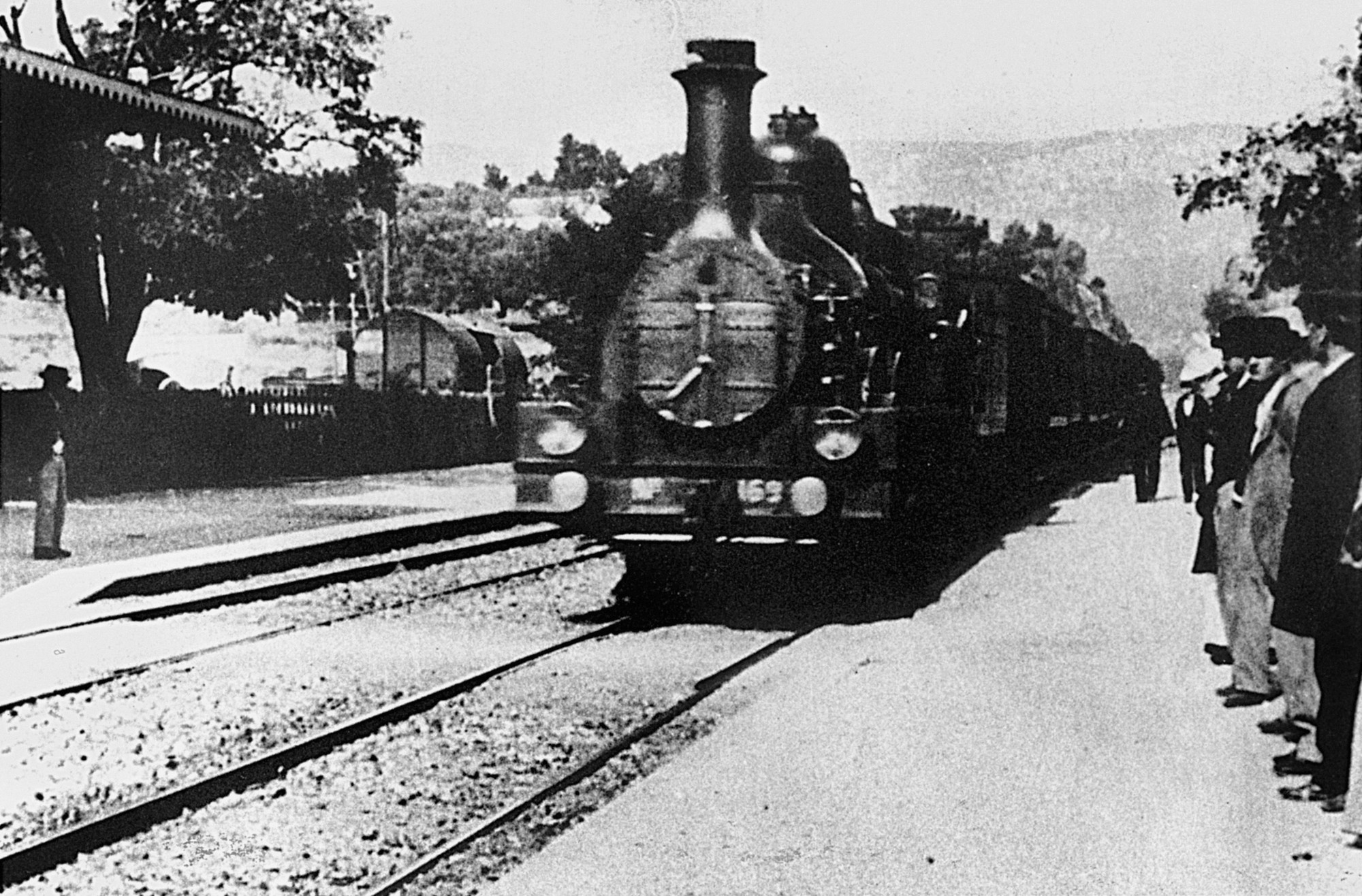
L'Arrivée d'un train en gare de La Ciotat. As jaded viewers, we find the image unremarkable.
Film creates its own enrapturing reality; one may describe a film scene of which they are particularly fond—its sequence, the sound and the vision, the associated feelings as they struck—as if it were a lived event. Is it so improbable, then, that the impressions of life, so naturally potent, could be actualized through the viewing of some particularly vivid, strikingly distinct filmic moment? That, like a tiger in one’s childhood zoo, such a sight could develop and command the viewer’s creative imaginings, their budding aesthetic fascinations?
Filmic novelty may be intense. I remember seeing my first horror films as a child. Their images seemed intertwined with the fancies of my daily life. The groans of Bigfoot in my nightmares merged seamlessly into the sound of morning doves upon awakening. I would clutch my chest beneath the sounds of gunfire. The monster’s face peered out from a dense, dark forest.
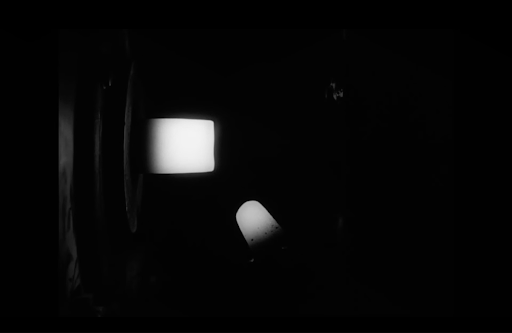
Persona opens with a view towards the minutiae of film projection.
My Zahir, or “matter” or whatever you’d care to call it, is the beginning of Ingmar Bergman’s Persona (1966), that frightening montage. Surely those same five prologue minutes have formed countless artists, with their attunement to the symbols of the subconscious, their psychological acuity, their confrontational strangeness. Its spirit permeates David Lynch’s Mulholland Drive (2001), Andrzej Żuławski’s Possession (1981), Abbas Kiarostami’s comparatively friendly Certified Copy (2010), and countless other works that would not exist without Bergman’s contagion.
A projector light shocks life into a dark room; we stare into its blinding eye as an eerie, screeching violin score begins. Shots of film reels manically unspooling are interspersed with the projector eye’s blinding white light, as though the movie that has just begun is experiencing a violent, difficult birth. A display of a countdown to one flips past, the numbers upturned and in strange orientations; at one moment, an erect penis flashes onscreen. We see the close-up of a man’s eye as it jumps about an unseen image and then watch as an animated lady washes her face on a reeling film strip.
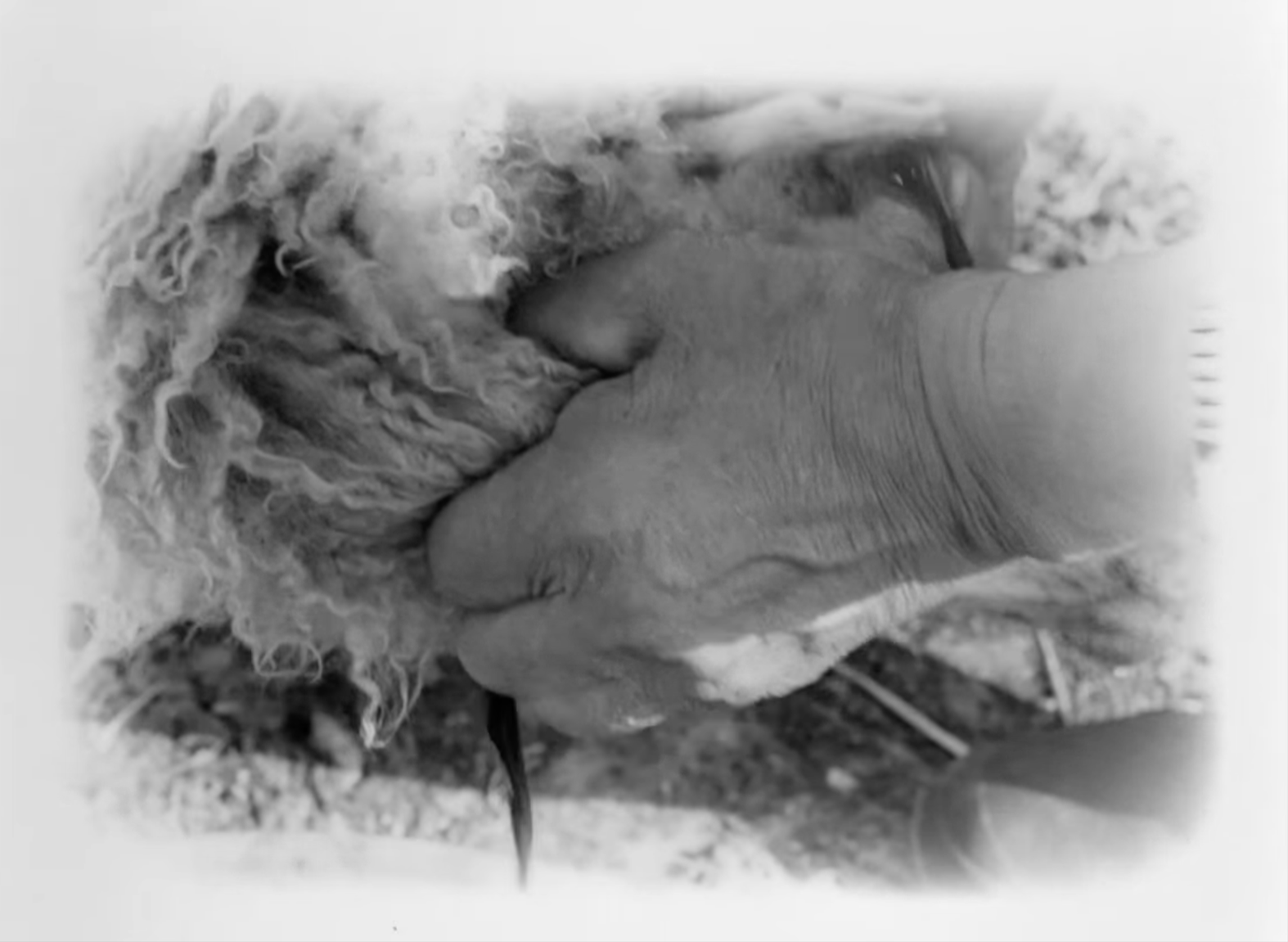
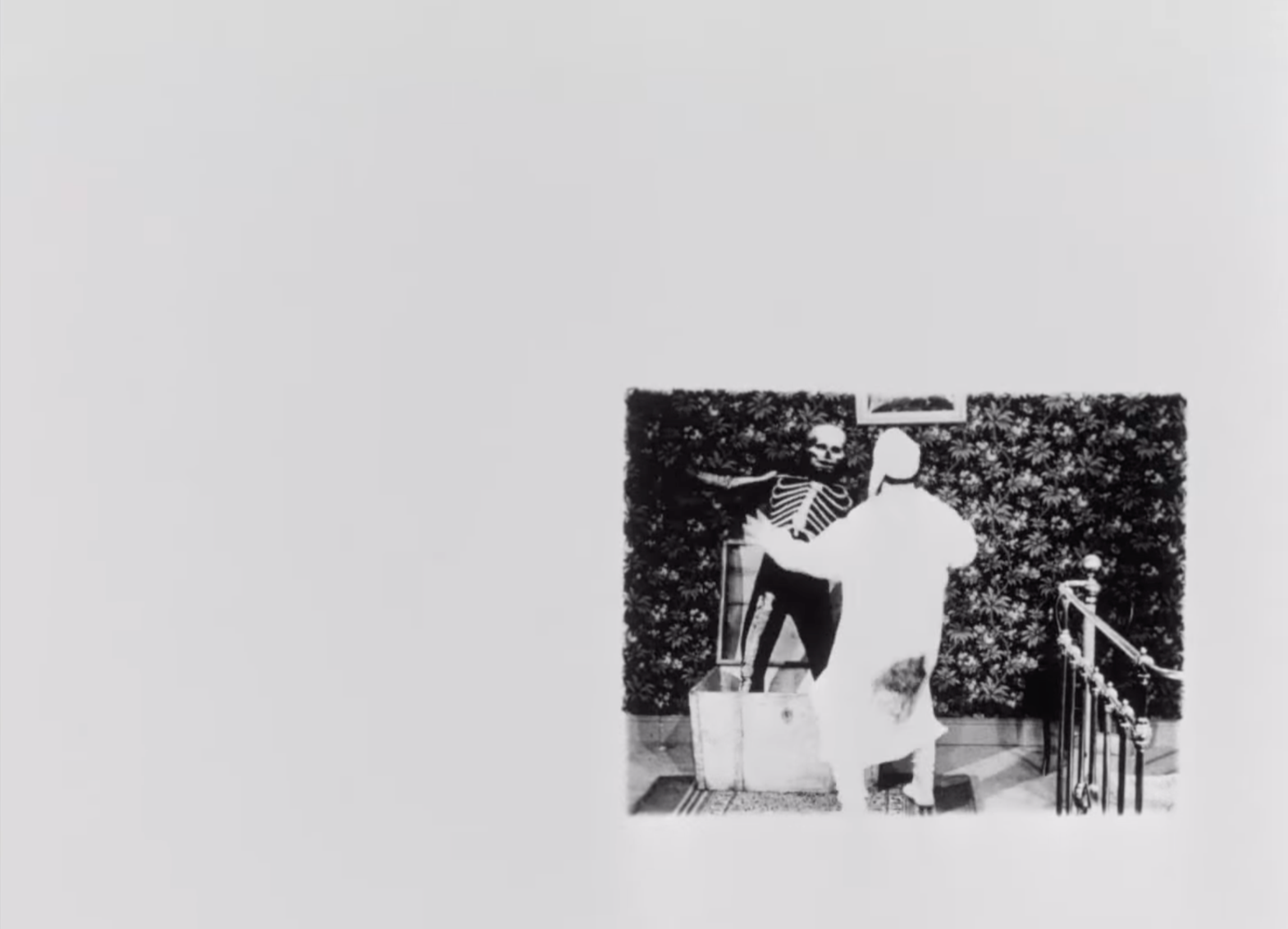
The score is now silent; we hear a film reel being spun. We see a clip from a silly, early silent film in which a man is pursued by a skeleton. Then follows a barrage of upsetting images. A spider crawls across the screen; a lamb is ritually slaughtered (we watch its blood pool and see its dying eye and the spilling of its organs); nails are hammered through a man's hands. A brick wall. A winter forest. A lying old woman's nose and mouth, seen from the side in Bergman and Sven Nykvis's stark black-and-white cinematography, resemble a mountain range. A child appears (Jörgen Lindström) and walks over to a screen displaying the blurred face of a woman (Liv Ullmann), grasping at the massive image as it comes into focus. The credits that follow are spliced between images suggestive of violence and sexuality and Ullmann's stony face. The film proper then begins.
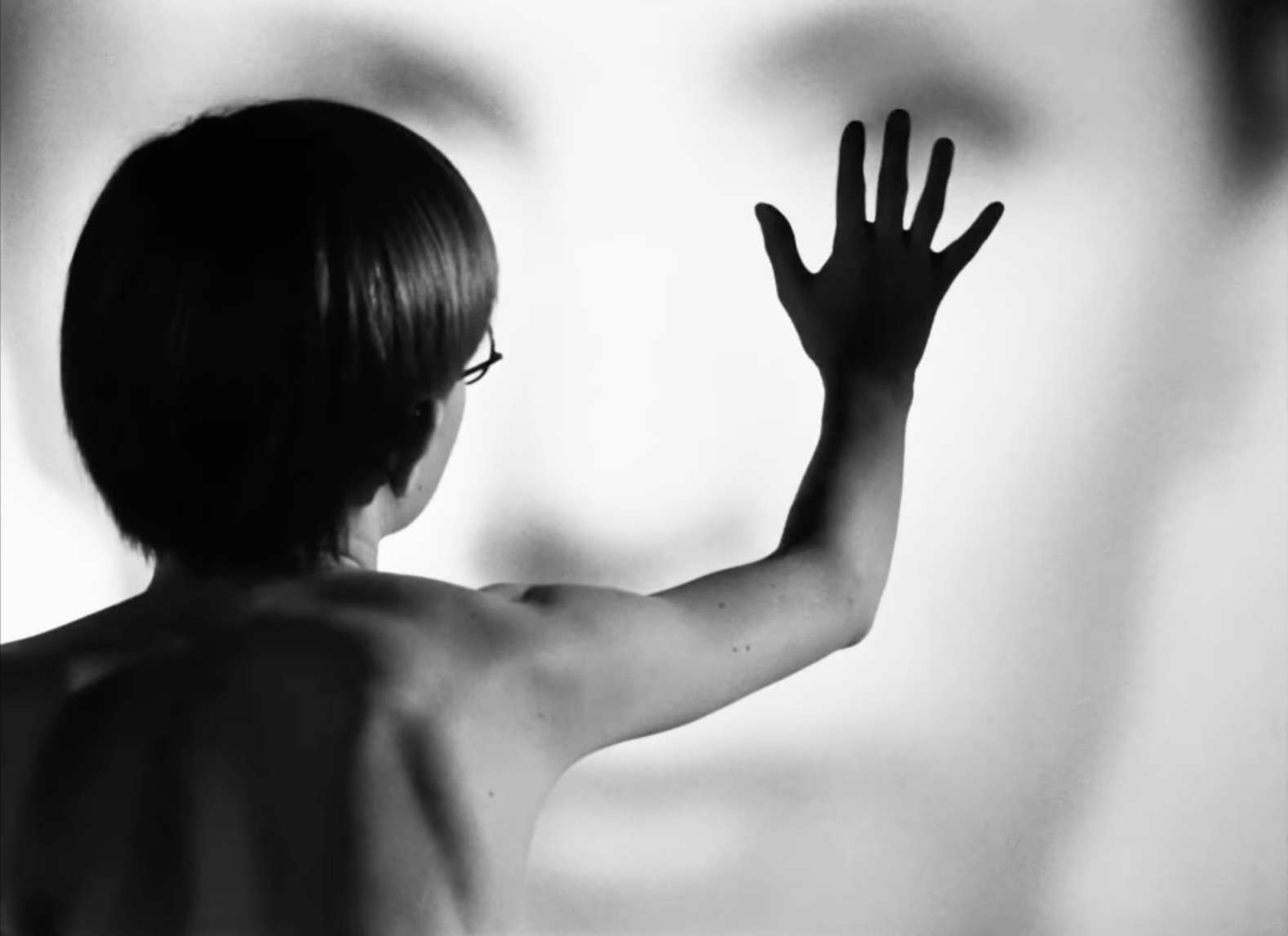
The child grasps at his mother’s face.
This cacophony of images has flooded my mind since my first viewing of Persona. They foreshadow and, in a sense, program the narrative’s thematic concerns; Persona is about art, authenticity, and the former’s frustrating nonengagement with existentially pressing issues of sex and death. We are therefore stunned by its prologue’s engagement with film projection. The discordant loud music, the frequent cuts between frightening and oblique, densely symbolic visuals, that haunting sequence of the child reaching for his mother: these elements strike the viewer as intensely novel and bizarre. A film which begins with a view to its own projector and proceeds to disrupt expectations of linearity and narrative through an imagistic and sonic assault cannot help but strike a vivid impression such as reality’s strangeness unfailingly creates. Potentials in the cinematic sequence can gain the actuality of a lived experience if they are, through unconventional editing, a strikingly odd angle, a discrepancy of image and sound, or through the newness of the filmed medium to its viewer, shockingly distinct.
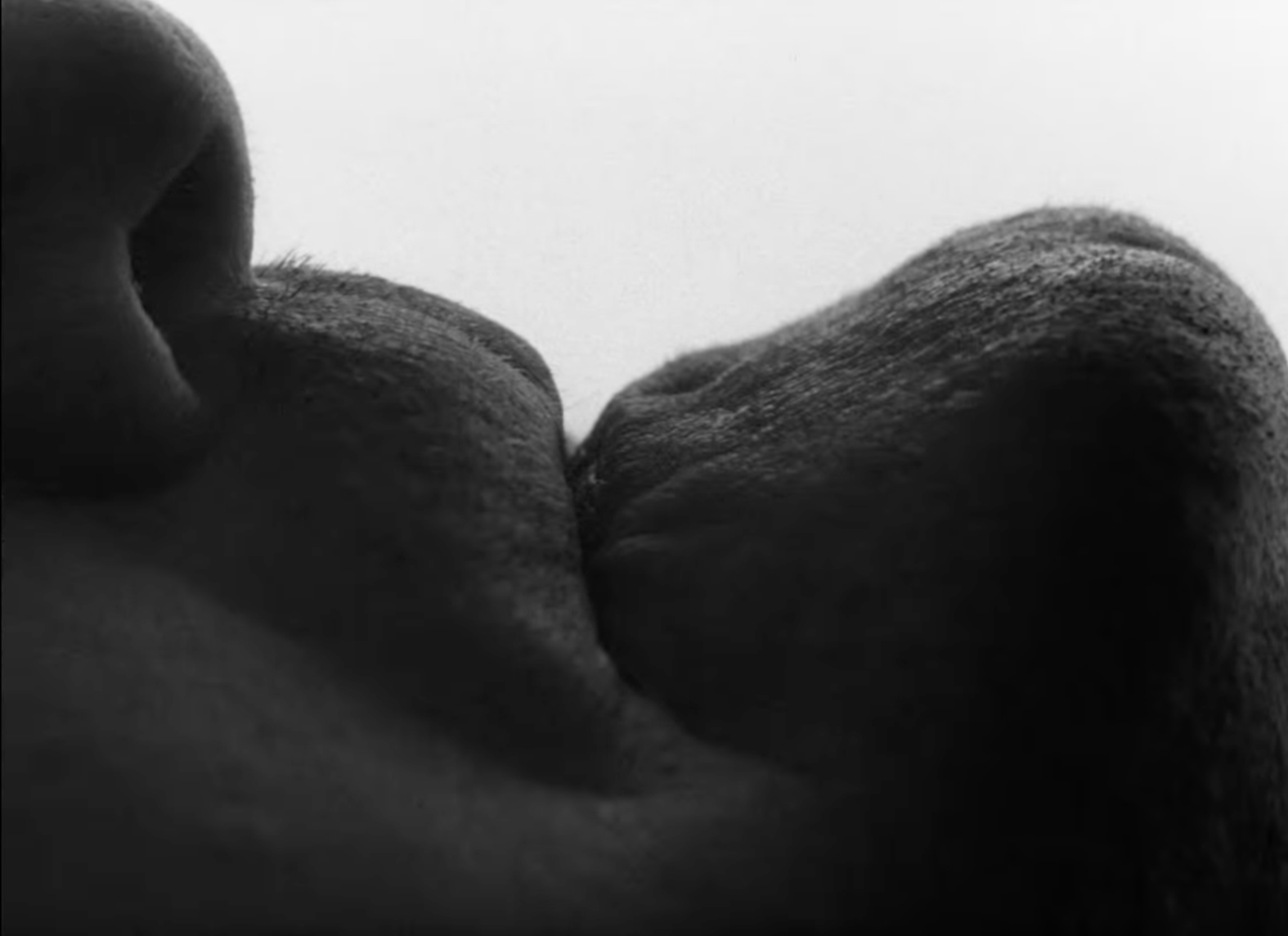
The visage of an elderly woman, shown at a strange angle, resembles a mountain range
I will now speak upon an obvious instance of this highly original film’s influence, representative, I think, of the cinematic Zahir’s quietly formative power. In an abstract, but thematically important, interpolation in Joachim Trier’s Sentimental Value (2025), the face of Gustav Borg (Stellan Skarsgård) dissolves and morphs into those of his daughters, Nora (Renate Reinsve) and Agnes (Inga Ibsdotter Lilleaas). Sentimental Value, a talky drama of familial relationships, has much in common structurally with Bergman’s melodramatic early films, such as Wild Strawberries (1957), also about a “Borg.” Yet while the film is stylistically and structurally distanced from Persona’s psychosexual confrontations, it is the latter’s famous face-morphing scene (arriving towards the end of Bergman’s film) that it explicitly references. The homage emerges suddenly, ex profundis, like a Freudian slip; the film’s latent interest in amorphous identity forms its subconscious undercurrent. Similarly, Borges rarely wrote directly upon the subject of tigers; yet their mesmeric stripes subconsciously informed the interest in infinity manifest in so many of his greatest stories. Within a neatly written family drama, Trier uncovers the spirit of a singular moment in Persona as Sentimental Value’s guiding potential; Bergman’s filmic reality thus moves the hand of the original artist.
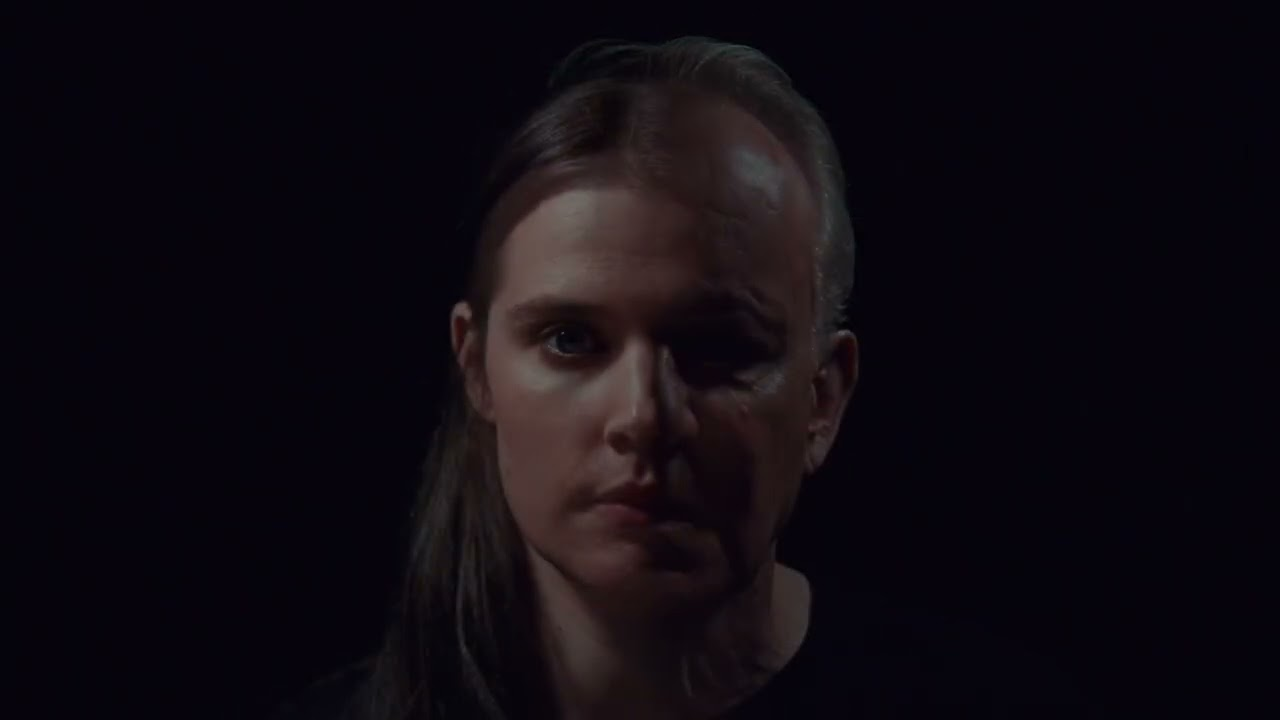
The face merge in Sentimental Value.
The experience of newness shocks us into life, inspires the creative act, and makes children, unable to separate fiction from the real, of us all. When watching a film of Persona’s strangeness, the experience is akin to a rediscovery of the medium, where at first we feared the train shuddering to the station. It is for the promising filmmaker and the receptive audience to discover these potencies, wholly as vivid as “the mysteries of matter.”
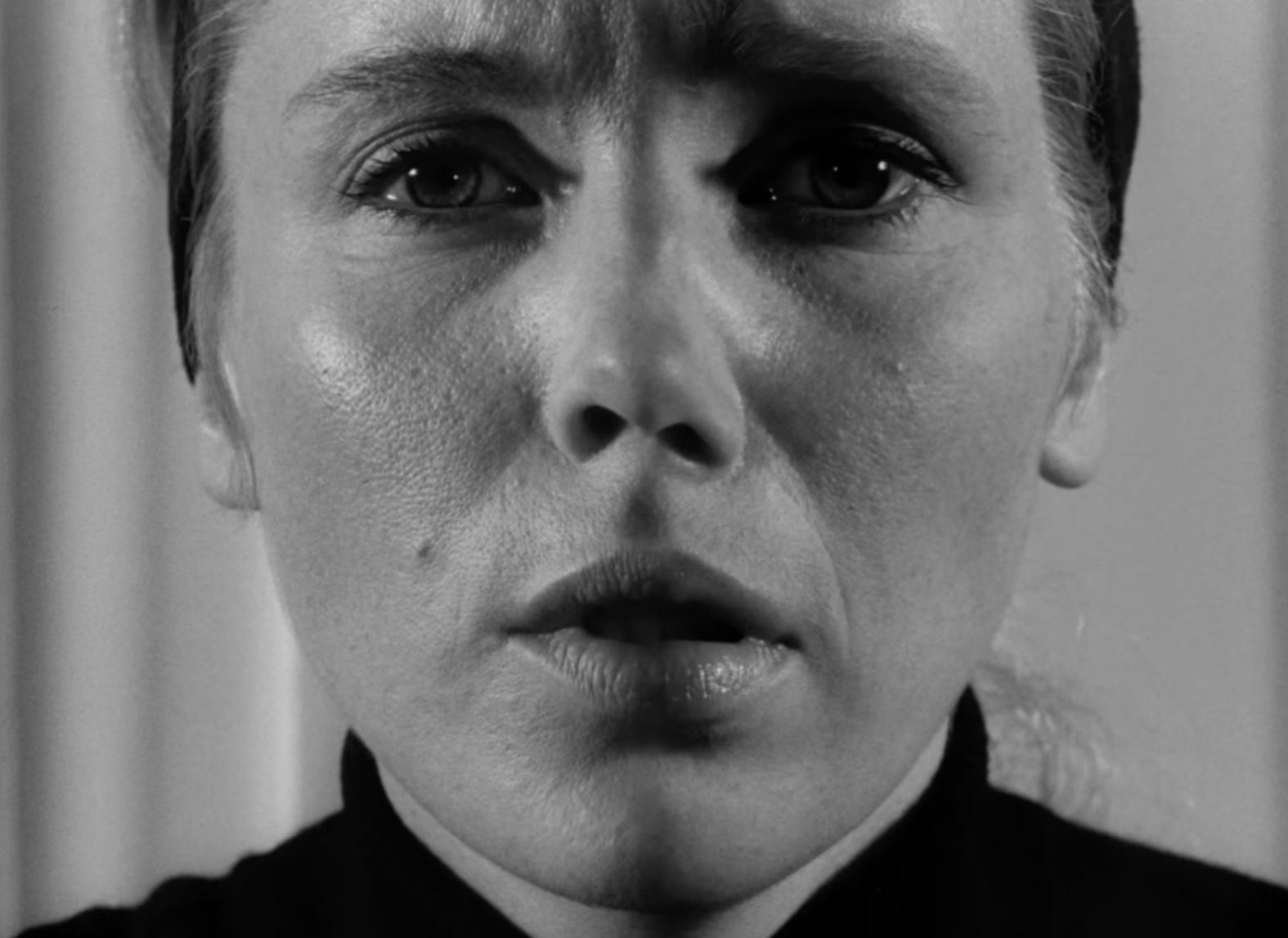
Bergman visually represents the collapsing identities of Alma (Bibi Andersson) and Elisabet (Liv Ullmann).
Stills from L'Arrivée d'un train en gare de La Ciotat (dir. Auguste and Louis Lumière, 1896), Persona (Ingmar Bergman, 1966), Sentimental Value (Joachim Trier, 2025)Ducornet, Rikki. The Deep Zoo. Coffee House Press, 2015.