
1990s, Hong Kong. Neon signs light up the streets; a smoky mystique mixed with the fragrance of street food and cigarettes permeates the air. Clandestine meetings and love affairs run rampant through the night.
Maybe an overly romantic view of the city, but if this is the Hong Kong we remember from the films of Wong Kar-wai, then Hong Kong is dead.
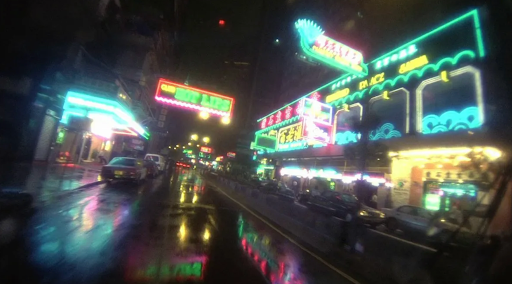
Fallen Angels, 1995
I got to witness the remnants of this Hong Kong. It was a British colony up until 1997. Both my parents and Wong Kar-wai grew up there. I visited many times as a child, and the amusing British-influenced culinary abominations delights like ketchup spaghetti I often ate in diners left quite the impression on me.
1997 was when the colony was handed over to China. In the following decades, Hong Kong changed dramatically—today, unrecognizable. For Hong Kongers, the time leading up to 1997 brought about an age of anxiety. For Wong Kar-wai, it was a chance to meditate on the pre-1997 Hong Kong that he grew up in, and this meditation ended up shaping the artistic choices of most of his films going forward.
Some history is warranted, first, to really see how 1997 secretly lurks in the backdrop of Wong Kar-wai films. The 1997 Handover included a series of agreements between the UK and the People’s Republic of China on how Hong Kong would continue as a city, colloquially known as “One country, two systems.” It guaranteed, in good faith, that the economic, cultural, and political systems that led to Hong Kong’s massive prosperity would stay untouched until 2047. For over a century before 1997, Hong Kong had flourished into a rich culture that developed its own currency, cuisine, judicial system, and codified freedoms of speech and press—the freedoms that China forbids.
In just two iconic scenes and a movie title, we can already start identifying the influence of 1997 geopolitics: In the Mood for Love’s red hotel scene, where Chow Mo-wan’s (Tony Leung) properly British-tailored suit juxtaposes Su Li-Zhen’s (Maggie Cheung) 60s Shanghainese dress; or Chungking Express’s canned pineapple expiration date alluding to the anxieties surrounding Hong Kong’s 1997 “expiration” of culture and way of life. And of course, 2046 being titled for the final year before 2047.
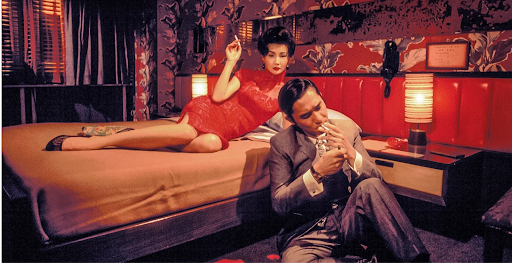
In the Mood for Love, 2000
Growing up, I visited Hong Kong often. I even lived there for months during the pandemic. It was where my dad’s ten siblings were born and raised, and where I’d remember seeing old pictures of my mom in my grandma’s home, wearing dresses like the one Su wore. I suppose it’s why Wong’s films make me nostalgic, like I’m flipping through my family album. But every time I returned, the city felt less like those pictures. The vibrant neon signs so iconically associated with Hong Kong faded in place of monotonous LEDs, and I hear more and more Mandarin on the streets rather than Cantonese. I’d come back to the US with a dull sadness and a strange yearning after seeing my motherland forget yet another piece of her identity. It’s an indescribable feeling, but Wong Kar-wai films come pretty close to capturing it.
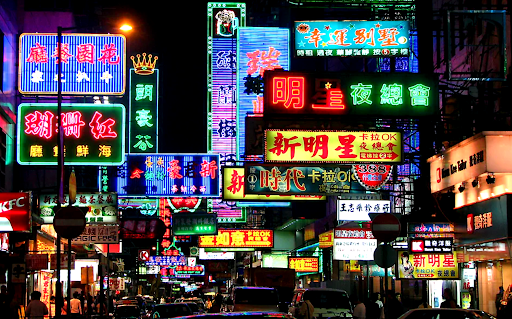
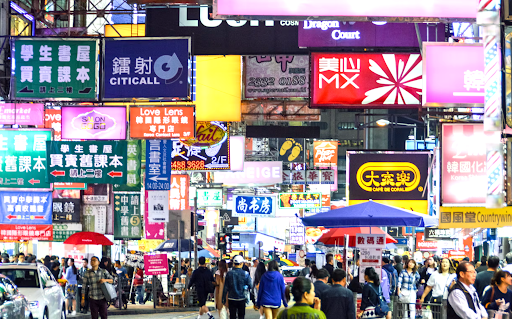
2007 vs. 2023
I must now admit that I haven’t always looked at my motherland through rose-colored glasses. Growing up, I hated the cramped Hong Kong apartments I stayed in with my grandparents and loud street markets. Hell, ketchup spaghetti. But Wong filmed those same tight hallways and chaotic markets like they were precious. It took 2019 for me to see them that way.
In 2019, China proposed an infamous “Extradition Bill” that overrode Hong Kong’s justice system, allowing the CCP to arbitrarily conduct court trials for Hong Kongers in China (where heavy censorship laws exist). One-third of Hong Kong’s population took to the streets and revolted. Over 10,000 were arrested and brutally assaulted by the Beijing-backed police in the streets. I vividly remember overhearing one of my cousins, who was arrested, crying for my dad to bail him out over a phone call. After 2019, China further restricted freedoms, installing a puppet government, banning 1989 Tiananmen Square memorials, and censoring all speech against the CCP. China had put our 1997 promise into a shredder and incinerated the remains.
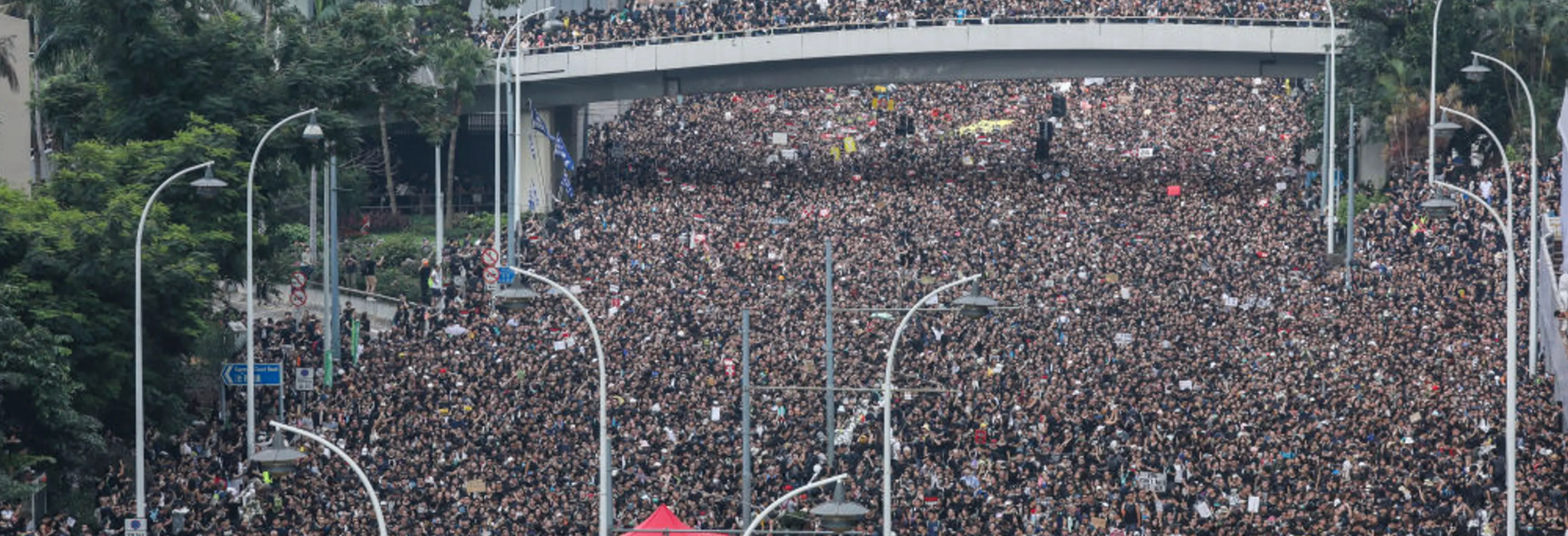
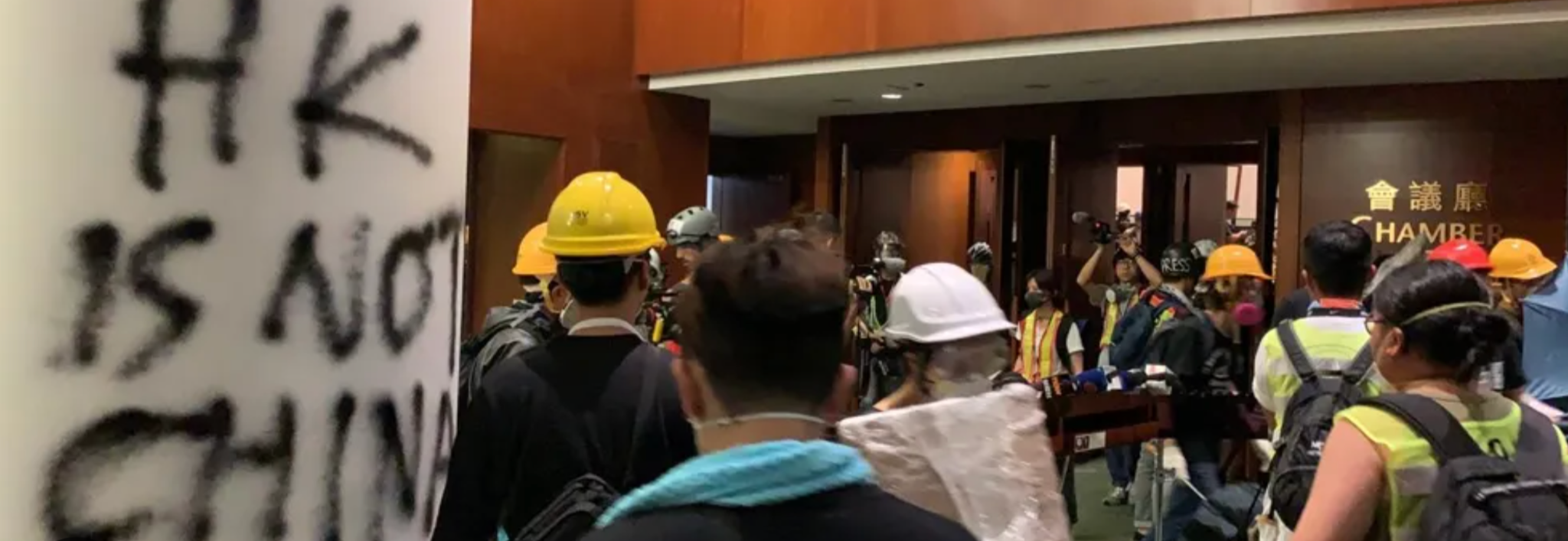
Over 2 million protesters in 2019.
This was Wong Kar-wai’s I-told-you-so-moment. He said in a 2005 interview that In the Mood for Love and its sequel 2046 were explicitly about “the promise from China to Hong Kong that it remains unchanged for 50 years.” Two films about an event 50 years into the future seemed excessive then, but completely appropriate now. To me, Chow Mo-wan’s evolution from a loyal lover to an avoidant-attachment playboy who lost all trust in love and the women around him was Wong’s prediction of Hong Kong losing trust in its government. And the physical 2046 location, “where nothing ever changes”, is Wong himself manifesting that Hong Kong never changes. There’s more evidence in In the Mood for Love. The film’s beauty is in Chow and Su’s relationship: they fulfill a sacred promise to not wind up in an affair like their spouses did, even as they hopelessly fall for each other. I see Chow and Su keeping their promise as Wong’s naive wishful thinking that China wouldn’t break theirs with Hong Kong. It’s him hoping that by 2047, China, the unstoppable force, will learn self-restraint—keeping the sacred promise they made 50 years ago.
But like most of Wong’s films, it’s often this stubborn hope, despite knowing what’s inevitable, that brings about the rarer, sublime quality of his works. While I share Wong’s aching nostalgia for the Hong Kong I grew up seeing, I, too, know what’s coming—the inevitable future where Hong Kong doesn’t recognize herself. For now, we should keep dreaming of the neon lights and remember the taste of ketchup spaghetti.