
The Erotic Thriller: Perseverations on Tension, Control, and Desire
Like any good Catholic girl, I spent most of my youth simultaneously fascinated and repelled by sexuality, particularly the perversions and obscurities orbiting it. Late on school nights, I would meticulously comb through endless IMDb lists and Tumblr masterposts titled things like “Top Erotic Thrillers of the ’90s,” “Sadomasochism in Film,” and other debaucherous curiosities of that sort. These rabbit holes led me, inevitably, to the dregs of society, most notably Sam Taylor-Johnson’s 2015 Fifty Shades of Grey, one of the worst movies I have ever seen and also probably the most famous movie involving BDSM and kink in relationships. The acting is atrocious, the dialogue excruciating, and the source material contains some of the most aggressively embarrassing prose ever committed to paper. Nevertheless, I watched, and read, it all.
I won’t harp on Catholic guilt and how it inevitably shapes a person, but if shame teaches you anything about sex, it’s that prohibition usually produces curiosity. I have always loved this quote from David Lynch on sexuality in film:
“Sex is a doorway to something so powerful and mystical, but movies usually depict it in a completely flat way. Being explicit doesn't tap into the mystical aspect of it either… people don't want to see sex so much as they want to experience the emotions that go along with it.”
Lynch’s observation gets at a truth that speaks to what I find so interesting about true erotic thrillers: the most compelling erotic films are rarely about sex itself. This is why films like Fifty Shades of Grey ultimately fail for me, in the same way the contentious 2026 Wuthering Heights adaptation by Emerald Fennell fails, as she continues to use sexual fetishism, both in that adaptation and in Saltburn (the bathtub scene, the graveyard scene, the period blood scene, etc.), as mere shock value.
Anne Carson makes a similar argument in Eros the Bittersweet, where she describes erotic love as triangular: the lover, the beloved, and the space between them. Desire lives in that gap, in the tension between two people that can never be completely closed without extinguishing the very force that draws them together. Cinema understands this. The best erotic thrillers are not the ones obsessed with bodies, but the ones fascinated by everything that surrounds them: the fantasies and performances and rituals. The real erotic charge lies in the distance before the thing itself happens.
The Piano Teacher (2001) dir. Michael Haneke
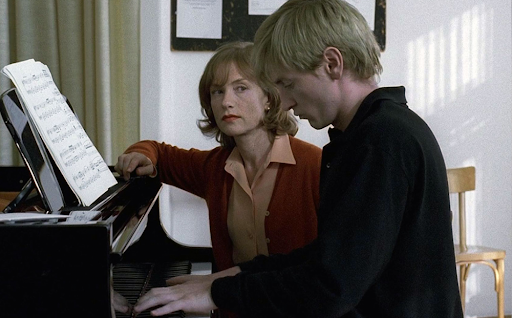
“After all, love is built on banal things.”
The Piano Teacher treats erotic desire as both liberation and discipline. Erika Kohut, a Vienna conservatory instructor living under the suffocating scrutiny of her mother, manages to channel her sexuality into forms of voyeurism, self-harm, and fantasies of humiliation, some of which are meticulously recorded in her writing throughout the film. For Erika, sexual repression becomes synonymous with organized desire. When Erika gives her student Walter a letter outlining the elaborate degradations she wants him to perform, she attempts to regulate desire through language and rules, transforming eroticism into something almost bureaucratic. The moment these fantasies enter the realm of reality, this fragile structure and the tension inherent to it collapse. This process of sexual dissolution, rendered cold and clinical through fluorescent lighting, static framing, and emotional distance, again suggests that erotic desire strangely emerges at the exact moment it is prohibited.
Secretary (2002) dir. Steven Shainberg
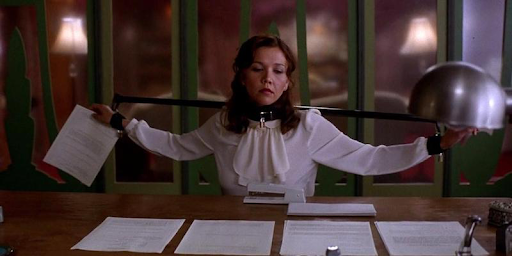
"Is it that sometimes the pain inside has to come to the surface, and when you see evidence of the pain inside, you finally know you're really here? Then, when you watch the wound heal, it's comforting, isn't it?"
Lee Holloway, a painfully shy young woman recovering from self-harm and comparisons to her more accomplished family members, begins working for the eccentric lawyer E. Edward Grey, whose disciplinary corrections of her typing errors gradually become an elaborate erotic language between them. Kneeling positions, dictated punishments, and strict rules transform mundane office work into ritualized intimacy. In someone finally seeing and responding to Lee’s impulses rather than attempting to normalize them, domination and submission becomes forms of intimacy. I see you, you see me.
Side note: when I see guys online share pictures from American Psycho, Fight Club, Taxi Driver, or really any role Ryan Gosling has taken on, paired with the caption “he’s literally me”, that is exactly how I feel about this movie and Lee. She is literally me. She has done everything and more for introverted, weird girls across the world.
The Duke of Burgundy (2014) dir. Peter Strickland
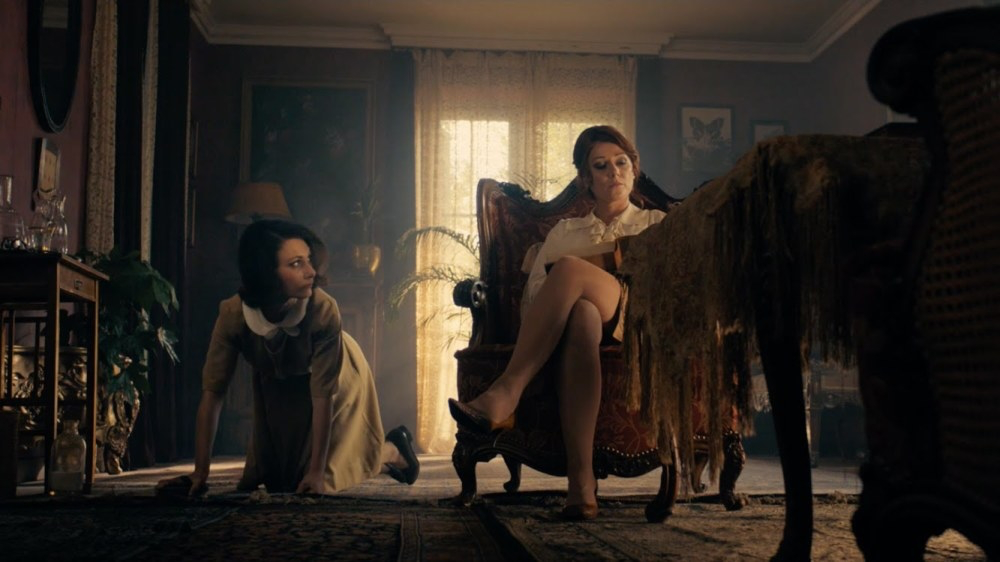
“It would be nice if you did it without having to be asked.”
Desire is fundamentally performative, an aspect of romance explored within this film’s representation of sadomasochism. The film initially presents Cynthia as a domineering house mistress berating her cleaning lady Evelyn, only to suddenly reveal that Cynthia is actually privately reading cue cards that instruct her how to dominate. Thus, Cynthia is performing a fantasy scripted by Evelyn, an inversion in which the apparent dominatrix is actually the one working hardest to please her partner and match her desires. As the relationship progresses, both women struggle to maintain their respective roles. Cynthia starts to worry that Evelyn loves the fantasy more than her real self, with Evelyn growing frustrated when Cynthia fails to perform the scenario convincingly. The Duke questions if love is more about sustaining a shared fiction or fantasy.
Eyes Wide Shut (1999) dir. Stanley Kubrick

“And no dream is ever just a dream.”
Erotic pursuit rather than erotic fulfillment. After Alice admits that she once fantasized, fairly graphically, about abandoning her entire life for a stranger she saw briefly on vacation, Bill Harford spends a long night wandering through a labyrinth of sexual possibilities, including sex workers, dinner party flirtations, off-putting costume shops, and a secret mass-orgy masked ritual party, none of which ever quite culminate in sex for the protagonists. Desire exists in the stray glance, the imagined betrayal, the possibility that something might happen.
Blue Velvet (1986) dir. David Lynch
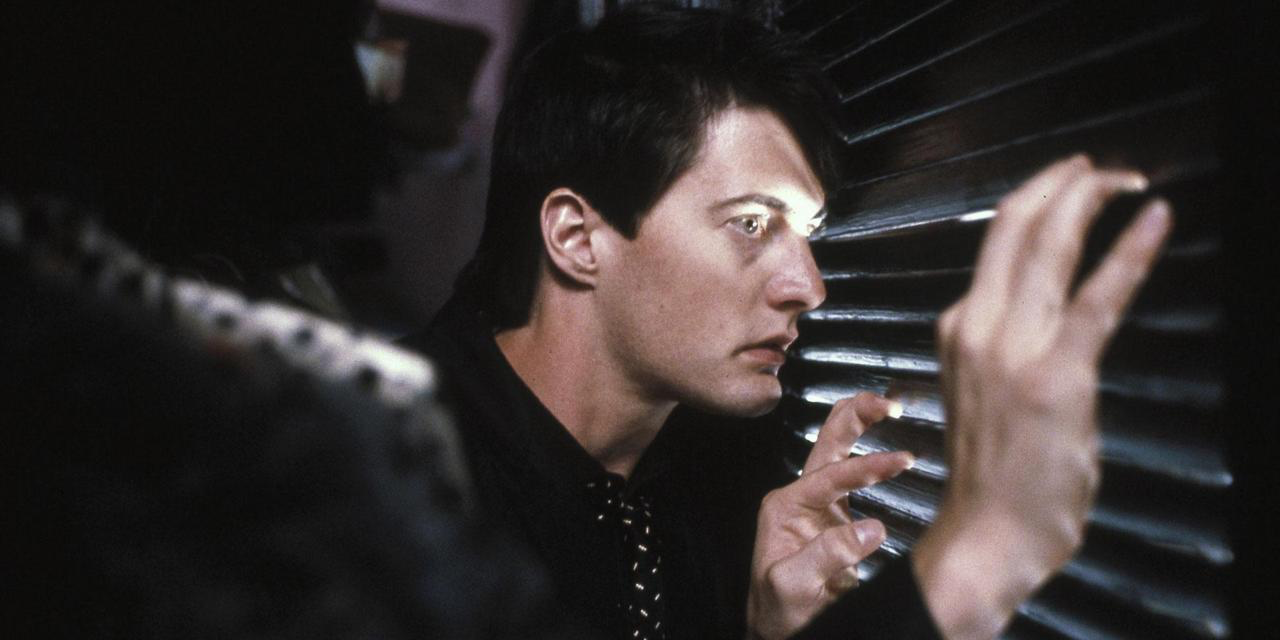
“I don't know if you're a detective or a pervert.”
David Lynch, I love you forever. I love David Lynch because he so often successfully took something banal and quietly twisted it into something deeply unsettling. Blue Velvet opens with an example of this: a manicured suburban lawn giving way to a rotting severed ear swarmed by ants, signifying that beneath the pristine surfaces of American suburbia lies something festering, grotesque, and purely obscene. The film’s haunting aesthetic world, with its eerie nightclub, Frank Booth’s weird gas inhalations, and the saturated reds and blues, will forever solidify this movie as one of the best examples of the erotic genre. What Lynch captures so perfectly and beautifully is the erotic pull of the forbidden; Jeffrey begins as a mere curious observer, hiding in Dorothy’s closet, but voyeurism gradually transforms into participation. The act of looking itself becomes a form of transgression.
Honorable Mention
Crash (1996) dir. David Cronenberg
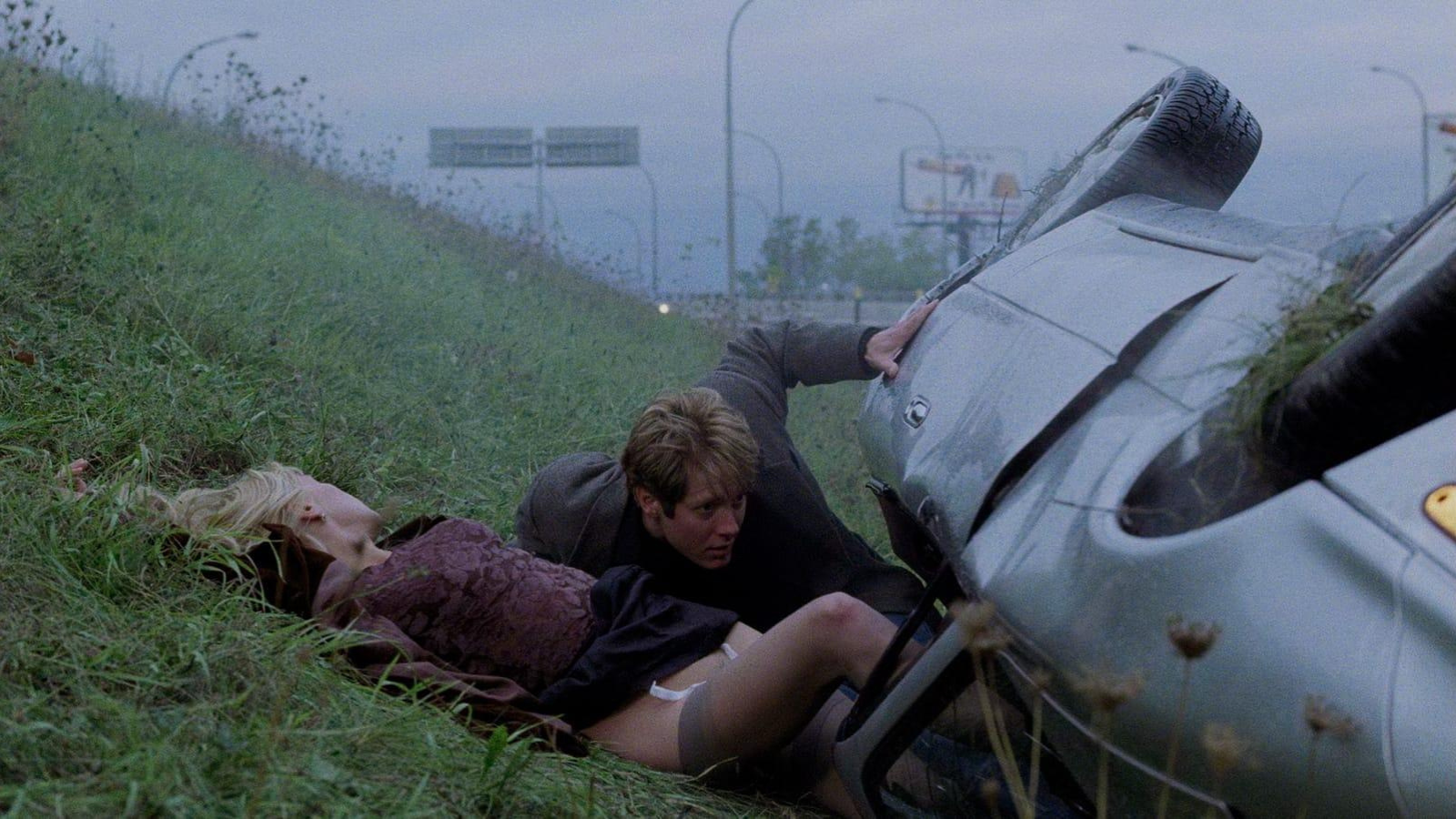
“The car crash is a fertilizing rather than a destructive event.”
I am already probably going over my word limit, but I would be remiss not to mention this classic: imagine a group of people turned on by automobile accidents, where crash sites and twisted metal become a landscape of erotic language. David Cronenberg pushes eroticism and the erotic thriller into the technological age, investigating this violent intersection of bodies and machines. Plus, there’s James Spader.